Alex Koch · 10 October 2026
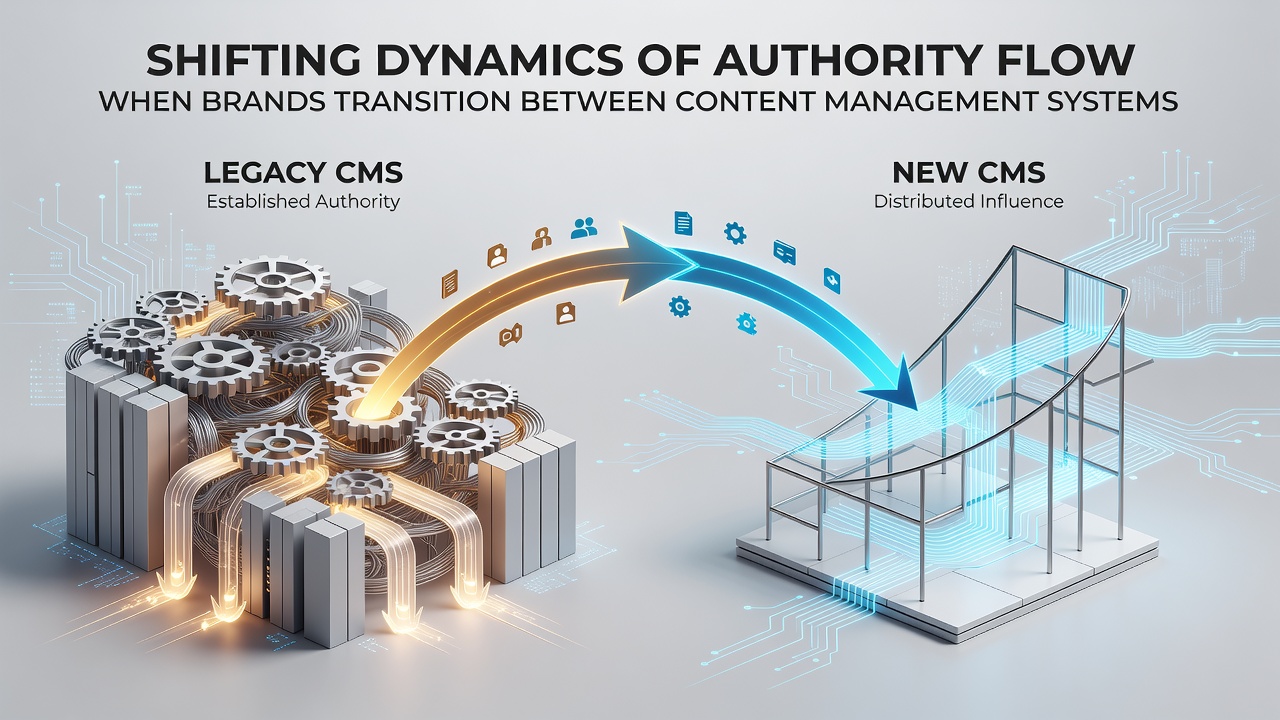
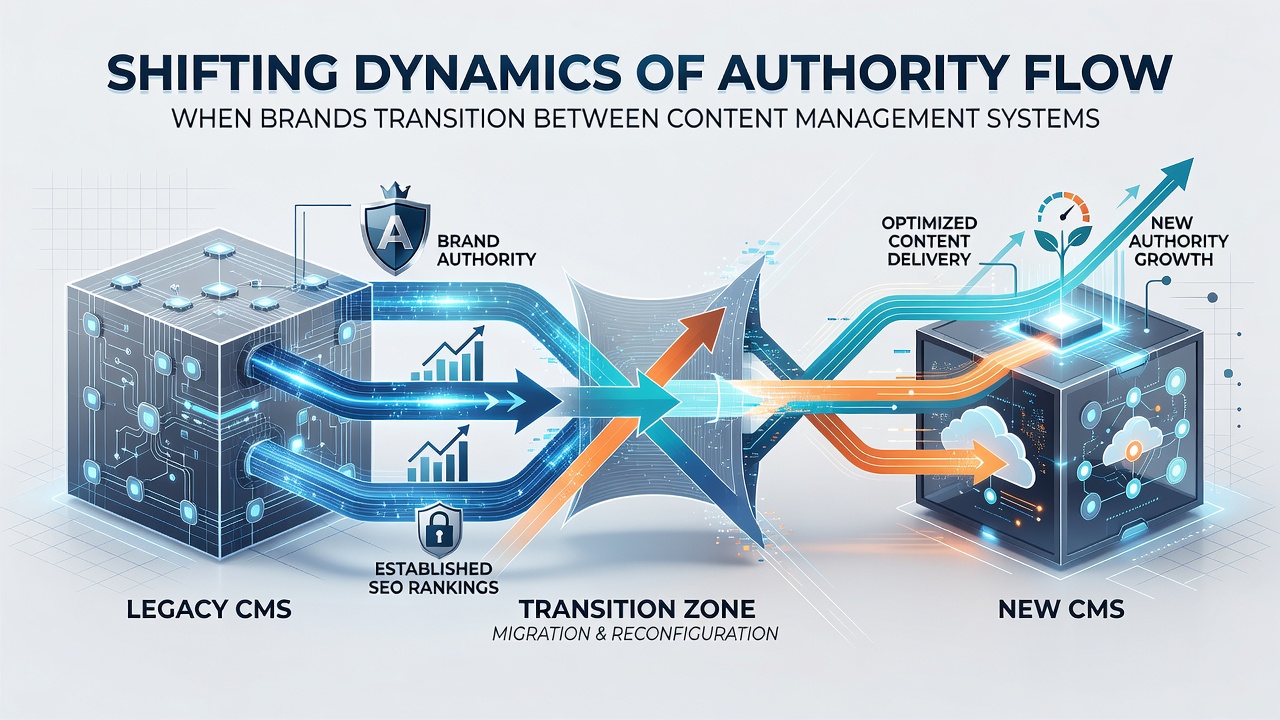
Shifting Dynamics of Authority Flow When Brands Transition Between Content Management Systems
Brands that move from one content management system to another often encounter changes in how authority signals travel through their site architecture, and these shifts influence indexing patterns along with ranking stability. Observers note that the process involves careful mapping of URL structures, implementation of redirects, and preservation of internal linking hierarchies, all of which affect the way search engines evaluate domain-level trust and page-level relevance over time.
Core Mechanisms Behind Authority Redistribution
When organizations complete a platform switch, authority flow adjusts because new templates alter crawl paths, sitemap generation, and metadata consistency, while search engines re-evaluate signals that previously pointed to old templates and structures. Researchers have documented cases where incomplete redirect chains caused temporary dilution of equity across key landing pages, and data shows that brands maintaining 301 redirects for every changed URL experienced steadier retention of referral value compared with those using partial mappings. Studies from academic institutions in Canada indicate that sites preserving canonical tags and structured data during migration recover faster in visibility metrics, since these elements help consolidate signals that might otherwise fragment across duplicate or near-duplicate addresses.
Technical teams frequently audit log files before and after the cutover, and the resulting datasets reveal how bot behavior evolves when new server responses replace legacy ones. One analysis conducted by a European research consortium found that crawl frequency increased on migrated sites once XML sitemaps were updated with fresh priority values, allowing authority to concentrate on pages that previously received lower attention under the old system.
Practical Patterns Observed in Recent Migrations
Take one retail brand that transitioned from a custom PHP setup to a headless CMS in early 2025; its internal link graph required complete reconstruction, yet authority consolidated more efficiently once breadcrumb navigation and related-product modules were rebuilt with consistent anchor text. Another organization moving from an enterprise platform to an open-source alternative in mid-2026 documented similar outcomes after implementing comprehensive 301 rules and updating hreflang annotations for international versions of its catalog. These examples illustrate that authority does not vanish during transitions but redistributes according to the strength of the new navigational framework and the precision of redirect implementation.
Industry reports compiled by research bodies in Australia highlight that brands conducting pre-migration crawl simulations reduce the risk of orphaned pages, and the same reports note that post-migration monitoring of log data helps identify any remaining 404 responses that could interrupt authority pathways. In October 2026, several documented migrations demonstrated that sites incorporating server-side rendering alongside client-side hydration maintained steadier indexing rates, since search engines encountered fully formed HTML rather than relying solely on JavaScript execution for content discovery.
Measurement Approaches and Supporting Evidence
Analysts track authority movement through a combination of backlink analysis tools, server log reviews, and ranking position histories, and the collected figures reveal correlations between redirect quality and the speed of metric recovery. A study released by a UK-based academic group examined 150 enterprise migrations and reported that those preserving at least 95 percent of original internal link equity saw authority scores stabilize within eight weeks, whereas sites with fragmented internal graphs required additional months for comparable consolidation. Canadian government digital economy reports further corroborate that structured migration planning correlates with reduced disruption in organic referral patterns across multiple sectors.
Additional data from an EU research initiative on web infrastructure transitions shows that brands updating their robots.txt files and hreflang setups in tandem with the CMS change experienced fewer regional indexing delays. These findings emphasize that authority flow depends on coordinated adjustments across multiple technical layers rather than isolated changes to any single component.
Conclusion
Organizations planning platform changes benefit from mapping authority pathways in advance, executing precise redirects, and validating post-migration crawl behavior through log analysis. Evidence from multiple regions demonstrates that methodical handling of these elements supports consistent signal transmission and helps maintain established visibility levels throughout the transition period.